

The Leadership Mistake That's Quietly Undermining Confidence
The best leaders don't outgrow learning. They outgrow yesterday's thinking.
Experience is one of a leader's greatest assets. It sharpens judgment, builds resilience, and provides perspective that can only come from navigating difficult decisions over time.
Yet experience has a hidden risk.
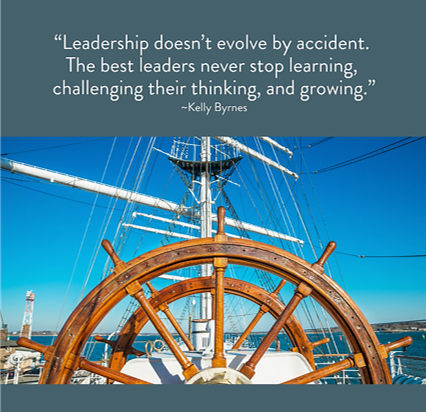
The business environment doesn't stand still. Technology changes. Employee expectations evolve. Markets shift. The principles of leadership remain remarkably consistent, but the application of those principles must continually adapt.
That's why I continue to read, coach, teach, and host conversations with leaders. Every opportunity to learn challenges my own assumptions and helps me view today's leadership challenges through a fresh lens.
One idea from our recent Leadership Book of the Month discussion of The Confidence Map by Peter Atwater has stayed with me.
When organizations face uncertainty, leaders naturally focus on increasing certainty. They communicate more frequently, answer questions, and explain the reasons behind difficult decisions. Good communication is essential.
But communication alone doesn't create confidence. People also need to believe they have some influence over what comes next.
Employees aren't simply asking, What's happening? They're also asking, What does this mean for me? What can I control? How do I move forward successfully?
That realization led me to better understand one of the most common leadership mistakes: Leaders often assume that if people understand the decision, they'll feel confident moving forward.
Understanding and confidence are not the same thing.
One of the patterns I've observed while coaching executives is that senior leaders and employees usually experience the same change from entirely different perspectives. By the time an announcement is made, leaders have typically spent weeks or months evaluating options, discussing scenarios, and making decisions. They've already worked through much of the uncertainty.
Employees are just beginning that process.
Without realizing it, leaders create a confidence gap. They believe they're providing clarity because they understand the path ahead. Employees are still wondering what the future means for them personally.
That gap changes behavior.
What leaders often describe as resistance, disengagement, or negativity may actually be diminished confidence. People who lack certainty or feel powerless naturally become more cautious, less willing to take risks, and more hesitant to embrace change.
The solution isn't to manufacture false optimism or pretend every answer is known. Great leaders build confidence by increasing clarity where they can, acknowledging uncertainty where it exists, and helping people understand what they can influence today.
As I reflected on this book, another connection became clear.
For years I've said that your culture becomes the worst behavior you tolerate. Culture is also shaped by the confidence leaders create.
Healthy cultures build trust. They encourage ownership. They create psychological safety. They establish clear expectations and consistent communication. Those qualities do more than improve engagement scores. They help people navigate uncertainty with greater confidence.
That's why I continue to recommend leadership books to experienced leaders. Every book does not contain groundbreaking ideas. But every worthwhile book gives us an opportunity to challenge our thinking, reexamine our assumptions, and apply timeless leadership principles to today's realities.
Leadership is about more than longevity.
It's about continually refining how we use that experience to lead the people and organizations counting on us today.