

Impressive results don’t excuse questionable culture
If a company had Glassdoor ratings hovering around 3.5 out of 5, recurring complaints about burnout, safety concerns, discrimination lawsuits, and polarized employee experiences, would we celebrate its culture?
No. We wouldn’t.
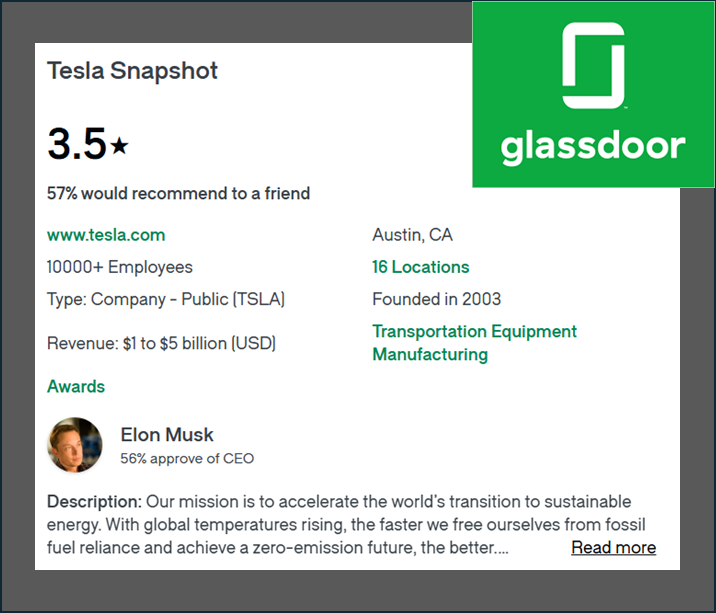
We would call it concerning.
We would flag it as a risk.
We would tell a client, “Something here needs attention.”
But when a company is wildly profitable and strategically important, judgment often softens.
It’s easy to be dazzled by success.
Tesla changed an industry. It accelerated the shift to electric vehicles. It proved skeptics wrong. It made a lot of money. And because of that, many leaders stop asking harder questions.
Purpose can’t be the only standard
Tesla’s mission is compelling: accelerate the world’s transition to sustainable energy. Few would argue with the importance of that purpose. And to be fair, Tesla has shown genuine commitment to it through innovation, scale, and bold decisions that sacrificed competitive advantage.
Purpose matters. A lot.
But purpose alone is not a culture.
A company can be deeply committed to what it is trying to solve and still deeply inconsistent in how it treats the people doing the work.
That inconsistency is where leadership accountability lives.
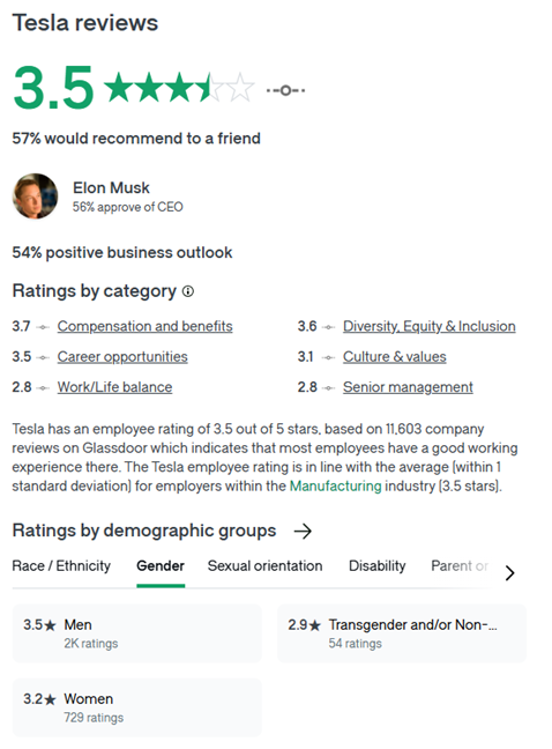
What the culture signals
When employee reviews consistently cite:
Extreme work hours and burnout
Fear of speaking up
Safety concerns during production ramps
Uneven management quality
Legal actions around discrimination and harassment
…those aren’t isolated complaints. They’re signals.
A Glassdoor score around 3.5 is not catastrophic. But it’s also not something most leaders would hold up as exemplary, especially when the stakes involve people’s physical safety, dignity, and trust.
If results were average, we’d call these warning lights.
Because results are extraordinary, we rationalize them away.
That’s not leadership. That’s outcome bias.
Profit changes what we tolerate
This is an uncomfortable truth many leaders avoid: When a company performs exceptionally well financially, standards quietly shift.
We excuse behavior we would challenge elsewhere.
We accept “that’s just how fast-growing companies operate.”
We conflate urgency with inevitability.
But here’s the leadership question that actually matters: Would this culture be acceptable if the stock price dropped?
If the answer is no, then the culture isn’t strong. It’s just protected by momentum.
People are not an externality
The most troubling pattern in Tesla’s culture story isn’t intensity. Many high-performing cultures are intense. It’s the repeated signal that people become expendable when they get in the way of speed, scale, or narrative.
And the irony is this: A company can pursue a noble external purpose while quietly eroding its internal moral authority.
That erosion may not show up immediately on the balance sheet, but it always shows up eventually—in turnover, lawsuits, reputational drag, and leadership credibility.
The leadership standard going forward
This isn’t about demonizing Tesla. It’s about raising the standard for leaders everywhere.
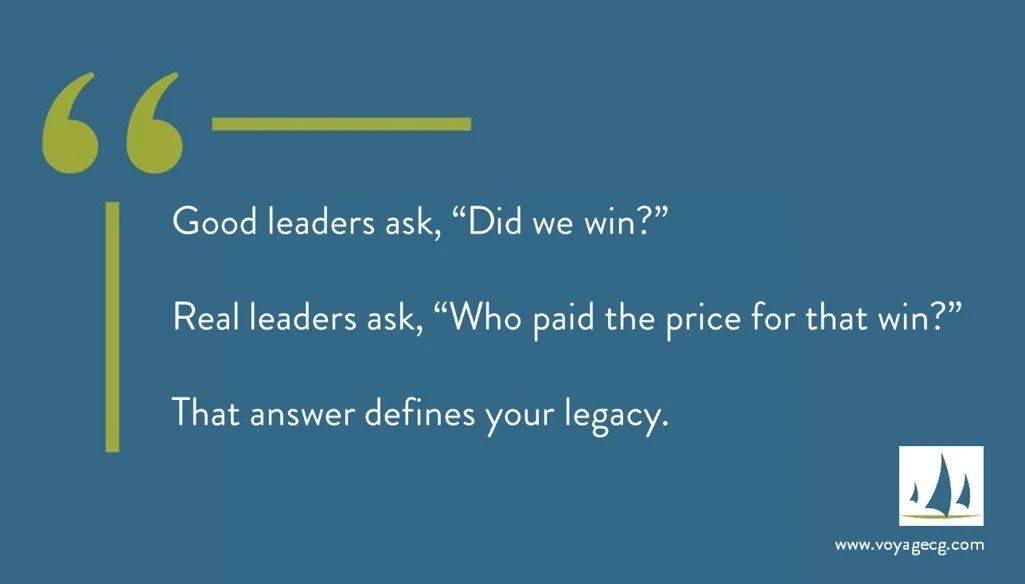
Real leadership doesn’t ask only, “Did we win?”
It also asks, “Who paid the price for that win?”
Because when leaders look back at their careers, and their lives, it won’t be the numbers alone that matter. How they treated people will.
Companies that want to endure can’t rely on purpose or profit alone.
They have to earn trust on the inside, not just admiration on the outside.
That’s the real test of culture.
📍If you’re a leader who wants strong results and a culture you’ll be proud of years from now, this is the work we do every day. Learn more about how we help leadership teams build clarity, confidence, and courage.
👉 Check out our services